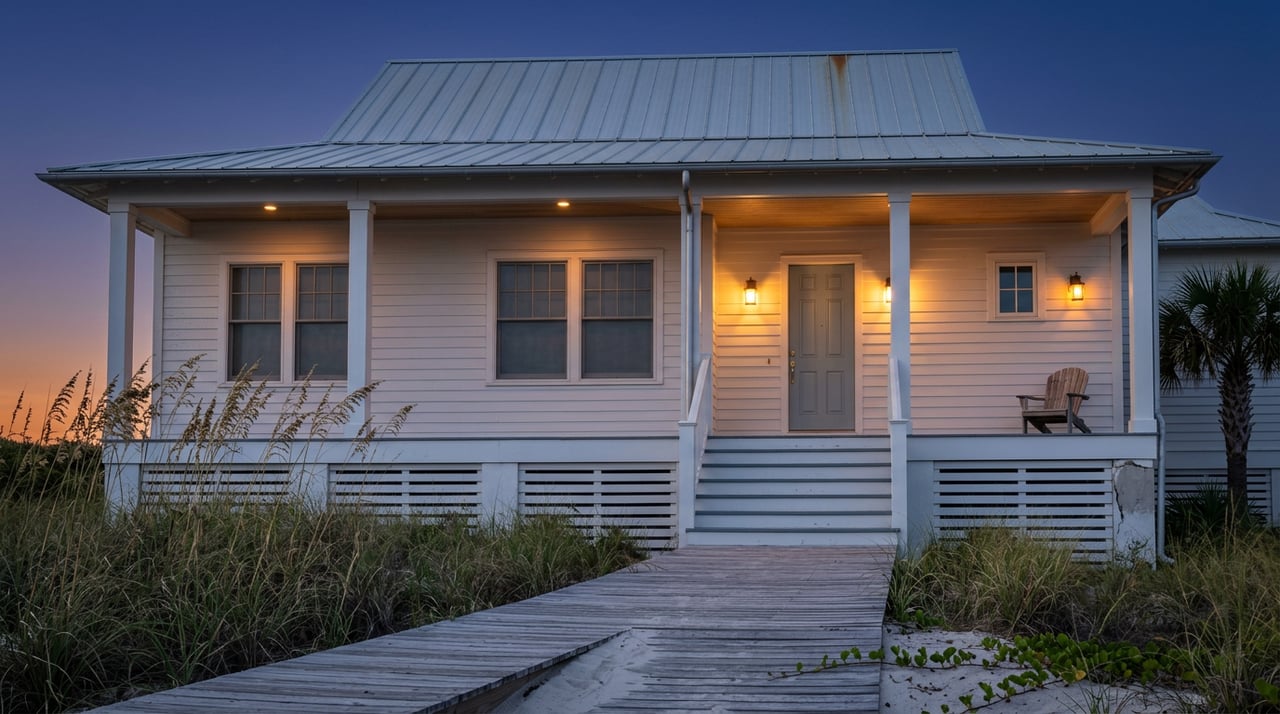
If you've lived on the island for even one nesting season, you already know the rhythm. Beach chairs come in before sunset. Porch lights get swapped for amber. The condo balconies dim by nine. What looks to visitors like a sleepy stretch of Gulf Boulevard is actually a coordinated dark-sky routine, and it runs from May through October whether anyone thinks about it or not.
The rules aren't the story here. The story is what the rules push the evening into. Once the beach itself goes quiet, the island's summer social life pivots inland by a block or two, over to the sound-side, or up onto the pier deck. That pivot is what this post is really about.
The clock the whole island runs on
As of mid-July 2026, Navarre Beach is nearly three months into sea turtle nesting season with 14 nests laid, 13 of which remain, according to Cinnamon Tyler of the Navarre Beach Sea Turtle Patrol. That's the count locals check the way other neighborhoods check pollen forecasts. Nesting almost always happens at night, and hatchlings orient themselves toward the brightest light on the horizon, which is supposed to be the moon on open water.
When it isn't the moon, the consequences are measurable. Tyler has said humans caused nearly 300 hatchling deaths on Navarre Beach in the prior nesting season, because when hatchlings emerge they head toward the brightest light source and get drawn inland by condo, house, and phone lights instead of the Gulf.
"So when they hatch they head to the brightest light source, which hopefully would be the moon."
That biology is why a Barrier Island Lighting Ordinance in place since 2018 requires water-facing residential and business structures to close blinds at night, shield outdoor lights, and use low-wavelength amber or "Wildlife Friendly" bulbs for outside lighting. Santa Rosa County's most recent lighting survey identified 77 out-of-compliance locations, with fixes often as simple as turning off the light during turtle season or taking down rope lighting. Enforcement leans on courtesy letters rather than fines, which is why the community norm matters more than the code itself.
What "Clean, Dark, Flat" actually looks like at 7:45
The county's "Leave No Trace" ordinance asks residents and visitors to return all personal items to their property or vehicle at the end of each day, and personal property left unattended after sunset is removed and disposed of. Paired with the "Clean, Dark, Flat" campaign the Sea Turtle Conservation Center pushes, it produces a very specific end-of-day choreography on the Gulf side.
Here's the actual checklist a Navarre Beach household tends to run through between roughly 7:30 and dusk:
- Fill in any holes the kids dug and knock down sand castles so a nesting female or hatchling doesn't get trapped
- Break down umbrellas, canopies, chairs, coolers, and toys and carry them back up the walkover
- Switch outdoor fixtures to amber, or just turn them off, and pull blackout curtains on any Gulf-facing window
- Trade the phone flashlight for a red-film cover or a turtle-safe red flashlight of the kind the Ocean Wonder: Marine Life in Clay workshops at NBSTCC send participants home with
- If a nest is roped off nearby, give it a wide berth and skip the flash photos
Once the beach clears out and the balconies dim, the evening has to go somewhere. It generally goes to one of three places.
The pier deck at golden hour
Windjammers on the Pier sits right next to the entrance of the Navarre Beach Fishing Pier, and in July it's the closest thing the island has to a town square between six and nine. Open-air seating, two full-service bars, live music most weekend nights, and a straight-line view down what the Santa Rosa County Tourist Development Council promotes as the longest fishing pier on the Gulf of Mexico.
The pier itself is the other draw. For the July 4, 2026 fireworks show, the pier opened at 5 a.m., closed to walk-ons at 6 p.m. so crews could set up, and launched the display at 9 p.m. from the octagon at the end. On any normal summer night, walking the pier at sunset costs a dollar and does more for your understanding of the local fishery than any guidebook. Kings, Spanish mackerel, and cobia get pulled up at the rail while pelicans work the pilings underneath.
If you're bringing out-of-town family and want them to understand why anyone stays on this island past Labor Day, that mile-long walk over open water at 8 p.m. is the argument.
The sound-side alternative
The far quieter answer to a summer evening is to give up on the Gulf side entirely and drop down to the sound. Emerald Waterfront Bar & Grill sits at 8491 Navarre Parkway, directly west of Navarre Park on the water. Under owner Tommy Gialamas since a January 2025 reset, it's built around chef-driven Gulf Coast fare, hand-cut steaks, and sunset views over the Navarre Sound. Gialamas also owns Emerald Republic Brewery, so pours of Lumi, 10 Wraiths, and Cherry Gozen sit on the tap list, with pints starting at $3.
Dewey Destin's Navarre works the same trick from the other side. Outdoor tables face Santa Rosa Sound, the seafood is unfussy, and the light stays on the water long after the Gulf side has gone dark. On Independence Day this year, Glow Paddle at Navarre Family Watersports had residents in clear-bottom LED kayaks out on the sound watching the pier fireworks from the water, which is the kind of view that only makes sense once you've stopped fighting for beach parking.
Late tables when the beach goes dark
For a proper dinner after the beach shuts down, the current shortlist is short and honest:
Beach House Social Bar & Grill is a few steps from the sand and takes OpenTable reservations, which matters more than it sounds like it should during the last two weeks of July. Juana's Pagodas & Sailors' Grill leans family-easy, with the Big Beach Stage running live music on holiday weekends and a menu that survives sandy feet and sunburned kids. Bella Luna Italian Bistro handles the nights you want white tablecloths and no sand at all.
None of these are secrets. What separates a resident's routine from a visitor's is knowing which one fits which night, and the ordering pattern most locals settle into is: pier deck for early sunset, sound-side for a real dinner, Beach House Social for the after-beach compromise.
What's actually on the NBSTCC calendar
If you want the island to make more sense, the Navarre Beach Sea Turtle Conservation Center at 8740 Gulf Boulevard is the place to spend a rainy Tuesday. Its main pool exhibit holds a 15,000-gallon saltwater tank with Sweet Pea, a non-releasable green sea turtle who serves as the center's Ambassador-in-Residence and is the first sea turtle many guests ever see. Hours are Tuesday through Saturday, 10 a.m. to 4 p.m.
Programming worth putting on the family calendar this year:
- Ocean Wonder: Marine Life in Clay, a nine-workshop series in partnership with Gulf Coast Kiln Walk Society, where kids and parents make ceramic sea-life medallions and take home a turtle-friendly flashlight
- The Sea Turtle Extravaganza in the fall, an event NBSTCC has run since at least 2014 that runs 10 a.m. to 2 p.m., free to the public, with crafts, touch tanks, live animal interactions, tours, and an appearance from Navarre Beach Fire Rescue District's fire engine
- Regular education sessions with partner organizations, including Rick O'Connor of Florida Sea Grant / UF/IFAS Extension, on subjects that shift from snakes in February to shorebirds in August
The center is small enough that repeat visits actually pay off. Sweet Pea's schedule is fairly predictable if you ask at the front desk.
The pattern that emerges
Here's what a first summer as a resident teaches you that a week's vacation never will. The dark isn't a nuisance and it isn't a rule someone imposed on the island. It's the reason the evening exists in the shape it does. If the balconies stayed lit until midnight, the pier deck wouldn't feel the way it feels at 8:45, the sound-side restaurants wouldn't have that particular quiet, and the beach walk after sunset wouldn't be a beach walk. It would be a parking lot.
That's the trade the ordinance actually protects, and it's why most residents settle into the rhythm without complaint by their second July. Turtle season isn't a constraint on the summer. It's the frame that makes the summer local.
If you're weighing a move within Navarre Beach, thinking about what the island feels like off-season, or just want to talk about how the sound-side and Gulf-side neighborhoods live differently in July, I'd love to hear from you. Reach out through Williams Coastal Group and let's connect.